BEHAVIOUR / DISPATCH
Teaching a Reliable Recall With Kindness
A gradual recall practice that makes coming back worthwhile without turning the cue into a trap.
Protect the meaning of the cue
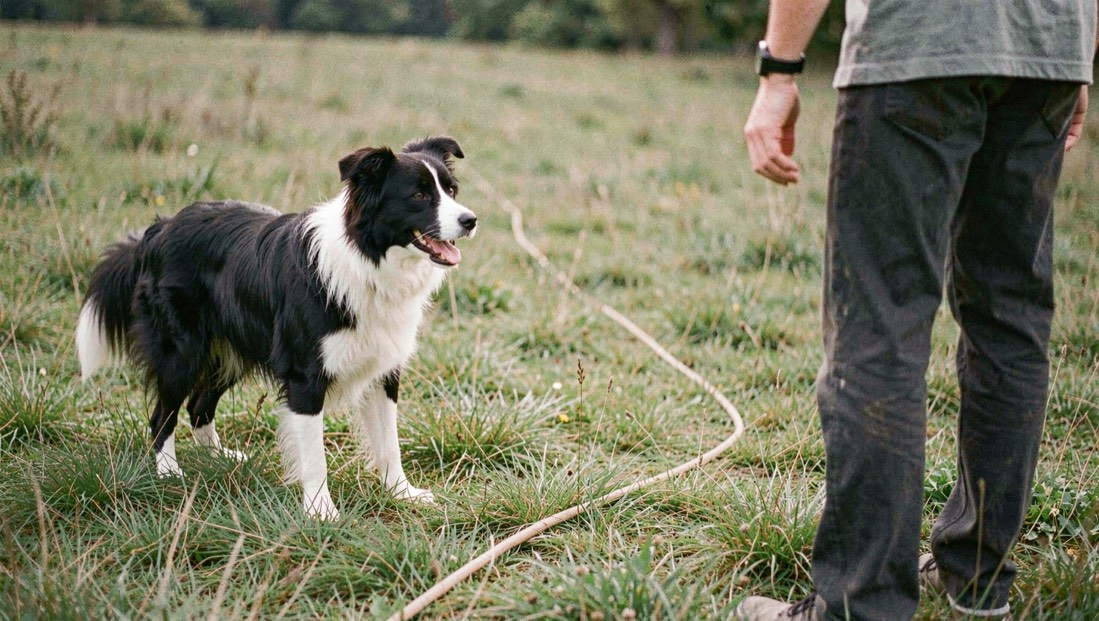
Choose a recall word or sound that you can say warmly and consistently. Use it first in situations where the dog is already likely to turn toward you. When the dog arrives, pay well and allow the session to continue. If the cue always predicts the end of freedom, a bath or a scolding, it becomes less attractive. Keep an emergency cue separate from ordinary practice and reserve it for a very high-value reward. Reliability is built by protecting the message, not by testing it at its hardest point.
Start in a hallway, not a field
Begin close enough that success is almost boring. Say the cue once, move away a step, open your body and reward the turn and arrival. A second person can help by holding the dog gently or dropping a treat behind you when the dog is ready. Increase distance only after several easy repetitions. Use a long line in open spaces until the recall is genuinely strong and local rules allow it. Safety is part of kindness. A dog cannot learn a cue while rehearsing a dangerous chase.
Pay the whole journey
A dog may orient first, then take several seconds to cross the room or path. Reward the first turn, the movement toward you and the final arrival in a way that keeps the dog connected. Do not wait for a perfect front position before paying. The useful behaviour is choosing the route back. If the dog arrives and you immediately grab the collar, clip the lead and leave, the next recall becomes harder. Touch the collar gently during easy practice, then release and return to play.
Use a real-life release
After a recall, give the dog a clear release to sniff or return to a safe activity when possible. This shows that coming back does not erase every interesting option. If the dog needs to leave, make the transition generous: feed several small rewards, walk a few steps, then offer another chance to investigate before going home. RSPCA training advice supports reward and repetition as the basis for useful skills. Recall is not a single exam. It is a history of good outcomes that you keep adding to.
Match the challenge to the dog
Squirrels, children, wind, wet grass and other dogs each change the difficulty. Work at a distance where the dog can still eat, hear the cue and choose a response. If the dog stares, lunges or stops taking food, you are too close or the setting is too hard for that repetition. Turn away, create space and return to an easier game. A recall plan should include the dog's actual motivations, not an imaginary version of the park where nothing competes with you.
Build a safety net around practice
A secure harness, identification details, a correctly used long line and a plan for gates matter as much as the cue. Never test an unfinished recall near traffic or a loose dog that may rush in. If a dog repeatedly ignores the cue, consider pain, fear, fatigue or a history of punishment and seek a qualified trainer. AVSAB resources outline humane training principles, while RSPCA trainer guidance can help you evaluate support. The kind version of recall is demanding in one way: it asks the human to make coming back worth it again and again.
KEEP THIS CLOSE
Four small moves
- Use a cue that predicts good outcomes, not only the end of freedom.
- Begin close, reward the turn and build distance in small increments.
- Practice collar touch and release so arrival does not become a trap.
- Use safety equipment and professional help while distractions remain difficult.
Sources & further reading
These links shaped the frame for this dispatch. They are starting points for a deeper conversation, not a substitute for individual advice.