BEHAVIOUR / DISPATCH
Reward-Based Training at Home
A humane home practice built around clear cues, useful rewards and sessions short enough to repeat.
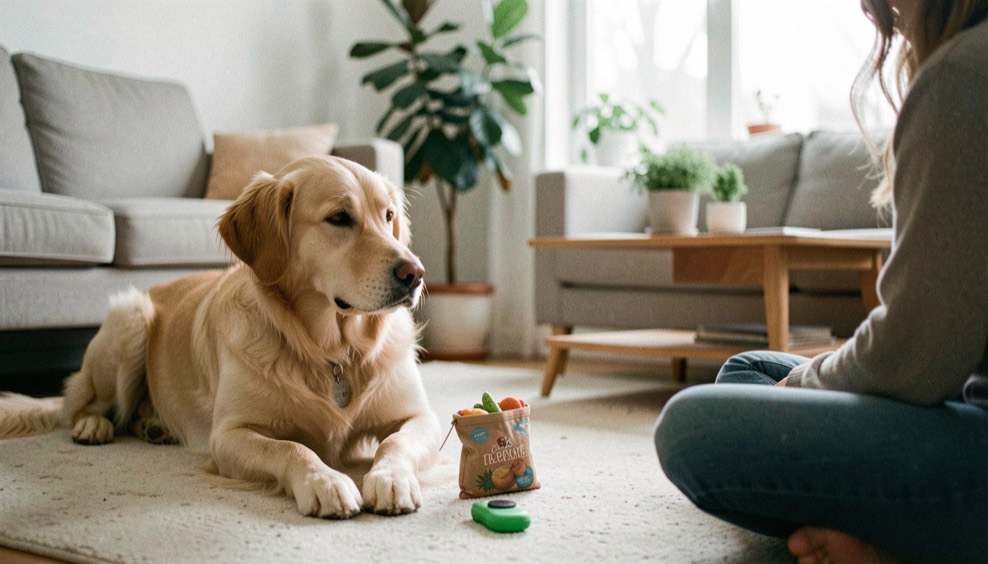
Define the behaviour in a way you can see
Training becomes easier when the goal is observable. Instead of asking for a generally good dog, choose a small action such as four paws on the floor, a nose toward your hand or a mat touch. Decide what the first version looks like before you start. A clear target helps you notice progress and prevents the session from becoming a series of corrections for behaviour you never explained. AVSAB position statements provide a useful welfare basis for reward-based teaching and for avoiding methods that rely on fear, pain or intimidation.
Choose a reward the animal can use
Food is common because it is fast, but it is not the only option. A toy, permission to sniff, access to a doorway or a moment of social contact can all matter, depending on the animal and context. Keep the reward small and the delivery calm enough that it does not create a new problem. If the dog is too excited to take food or cannot disengage from the toy, lower the difficulty. The best reward is one that helps the learner return to the next repetition rather than one that overwhelms the room.
Teach in the easiest room first
Your kitchen is not a park, and your hallway is not a busy veterinary waiting room. Begin where the animal can succeed, then add one distraction at a time. Change distance, sound, surface or movement gradually. If the behaviour falls apart, the answer is usually to make the environment easier, not to repeat the cue louder. RSPCA training guidance also emphasises timing and positive reinforcement. Mark the useful moment quickly, deliver the reward, then give the animal a short pause before asking again.
Keep cues consistent across people
A household can make training confusing without meaning to. Choose one word or hand signal, decide what it means and make sure everyone knows what happens after the response. Do not use the cue repeatedly while waiting for a different behaviour. If the learner does not respond, help with the environment or return to an easier version. A written note on the fridge can be enough. Consistency is not robotic obedience. It is a way to make the conversation fair and predictable for the animal.
Notice what happens between repetitions
The pause after a reward tells you how the session feels. A dog that looks back, breathes normally and offers another attempt is ready for a little more. A dog that scans, scratches, freezes or leaves is giving useful information about fatigue or difficulty. End while the animal is still willing. Several 90-second sessions can teach more than one long block that ends with frustration. Training should fit into the day as a small practice, not require the household to become a classroom with a timetable.
Use professional help early when needed
Reward-based home practice is powerful, but it is not a substitute for case-specific behaviour support. Fear, aggression, separation distress, sudden changes or repeated safety concerns deserve a qualified professional who can assess the environment and the animal. RSPCA trainer guidance and AVSAB resources can help a household understand humane standards while searching. Ask what methods will be used, how stress will be monitored and what management steps keep everyone safe. A good trainer helps the pet find a workable choice, not simply suppress the signal that something is difficult.
KEEP THIS CLOSE
Four small moves
- Choose one observable behaviour and define the first easy version.
- Use a reward that keeps the learner interested but able to think.
- Add one distraction at a time and lower difficulty when needed.
- Seek qualified help for fear, aggression, separation distress or safety concerns.
Sources & further reading
These links shaped the frame for this dispatch. They are starting points for a deeper conversation, not a substitute for individual advice.