DOGS / DISPATCH
How to Build a Calm Dog Walking Routine
A humane field plan for steadier departures, richer sniffing and walks that leave room for recovery.
Start with the departure, not the pavement
A walk begins several minutes before the front door opens. Keys, shoes, harness and the sound of a lead can all become part of an excitement loop. Put those pieces in a quiet order and give your dog one small pause between each step. The pause is not a demand for perfect stillness. It is a chance to notice whether the dog is able to think, take a treat or orient back to you. If not, lower the intensity: move the lead away, open the door later or return to the room for a breath. A calm departure is built from manageable repetitions.
Let sniffing set the first tempo
The opening minutes should not be a race toward distance. Sniffing gives a dog information about who passed through the space, how recently and what has changed. Choose a short, low-pressure stretch near home where the dog can investigate without being dragged from one interesting patch to the next. There is no prize for covering the most ground. A good walk is one your dog can process, not merely one that looks efficient on a phone step counter.
Build a route with easy exits
Predictability does not mean walking the same rectangle forever. It means knowing where the route can soften. Mark a few quiet lanes, open sight lines and places where you can turn without squeezing past another dog. If your dog becomes tense around traffic, people or other animals, use those exits early rather than waiting for a reaction. A U-turn can be taught as a cheerful change of direction, with a familiar word, a turn of your shoulders and a reward once the dog follows. The useful skill is not endurance at the edge of comfort. It is returning to comfort before the edge is crossed.
Use the lead as information
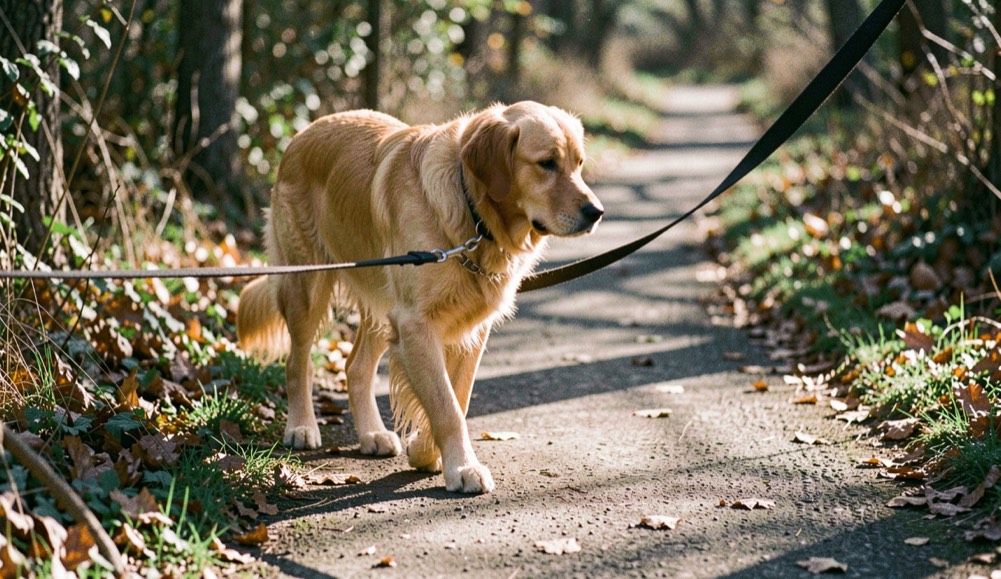
A lead is a safety connection, not a steering wheel. Keep your hand soft enough to feel a change in direction and avoid adding constant pressure that the dog has to lean against. When the lead loosens, mark that moment with a quiet word and continue toward something the dog values. When it tightens, stop or change direction without a lecture. This pattern makes the result clear while preserving the dog's ability to look around. Harness fit, footwear, weather and your own pace matter too. A dog who cannot walk comfortably will not learn from a technically perfect plan.
Plan recovery after the route
A dog may look fine during a walk and still need time to come down afterward. Keep the first part of the return home unhurried, offer water as usual and protect a quiet place where the dog can sleep without being handled. Notice whether the dog settles, paces, mouths objects or stays unusually alert. Those observations help you adjust tomorrow's route. Recovery is part of the walk's workload. A shorter outing followed by genuine rest can be more useful than a long outing that leaves everyone wired for the afternoon.
Keep a small route note
For a week, record only three things: where you went, what changed the dog's pace and how recovery looked at home. This is not a performance chart. It is a way to spot patterns that memory smooths over. You may find that a particular gate, time of day or narrow pavement matters more than distance. Share the notes with a qualified trainer or veterinarian if a new behaviour worries you. RSPCA guidance on dog training emphasises reward, timing and humane handling, while AVSAB position statements provide a useful welfare frame. The daily practice is simple: make the next good choice easier to find.
KEEP THIS CLOSE
Four small moves
- Prepare the route and escape options before clipping on the lead.
- Reward a loose lead and a voluntary check-in while the dog can still think.
- Treat post-walk settling as part of the routine, not an afterthought.
- Ask a qualified professional for help when fear or reactivity is escalating.
Sources & further reading
These links shaped the frame for this dispatch. They are starting points for a deeper conversation, not a substitute for individual advice.