NUTRITION / DISPATCH
Portioning Pet Meals Without Chasing Numbers
A practical record-keeping approach for feeding changes, treats and body-condition conversations.
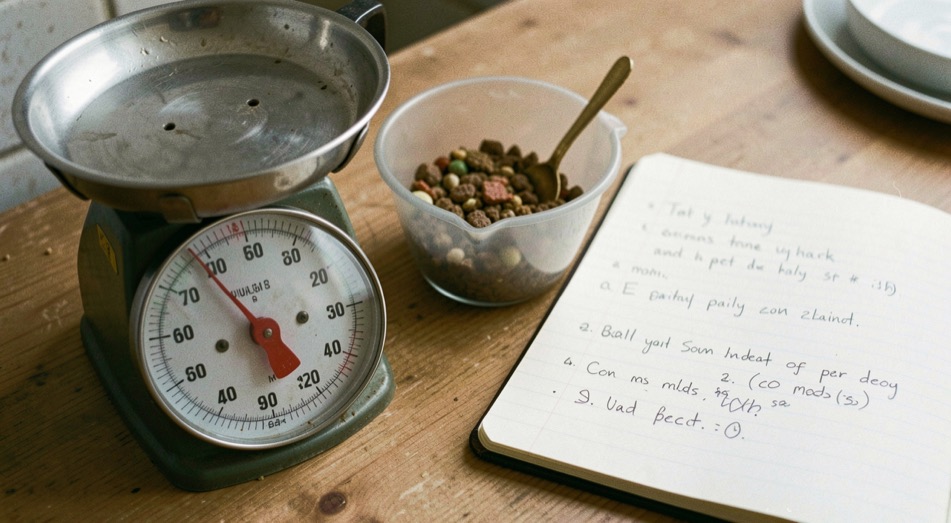
Measure the routine you actually have
Portioning starts with seeing the whole day. Include meals, treats, chews, training rewards, toppers and the little tastes that different people in the home may offer. You do not need a perfect ledger forever. A short audit over several days can show whether the written plan matches the bowl. Use the same units and write down whether a quantity is for the whole day or one meal. This is information for a conversation, not a moral score. Consistency makes it easier to notice what changes when the pet's appetite, stool or weight shifts.
Use a scale when precision matters
A measuring cup can be convenient, but pieces vary in size and density. A kitchen scale creates a more repeatable starting point, especially when a veterinarian has asked you to make a measured change. Keep the scale clean, place the bowl on it before adding food and record the result in the same unit each time. If the pet eats wet and dry food, note both rather than trying to estimate from memory. The goal is not to turn feeding into laboratory work. It is to reduce accidental variation while you learn what the animal needs.
Let the pet's condition guide the review
A portion number means little without the pet. Observe body shape, muscle, energy, appetite and changes in movement, then discuss those observations with a veterinary team. Avoid judging from a single photo or a breed comparison online. Growth, age, neuter status, activity, illness and medication can all change requirements. WSAVA nutrition guidance supports an individual approach and encourages attention to body condition rather than a package number alone. If a pet is losing weight unexpectedly, stops eating or seems unwell, seek veterinary advice rather than adjusting repeatedly at home.
Build treats into the plan
Treats work best when they are visible and purposeful. Set aside a daily amount before the first training session, choose sizes that make sense for the animal and use part of the usual food when appropriate. Several people can share one jar or note so the pet is not paid twice for the same afternoon. Chews and toppers deserve a place in the record too. A plan that bans every extra often fails in a busy home. A plan that makes extras count can remain generous and realistic.
Change one variable at a time
If you switch food, change portion size, add a supplement and start a new puzzle in the same week, you will not know what caused a change in appetite or stool. Choose the most important adjustment, agree on a timeframe with your professional, and keep the rest of the routine familiar. Record dates and small observations. A gradual transition may be appropriate for many diet changes, but the correct approach depends on the pet and the food. Follow the advice you were given rather than treating a generic transition chart as universal.
Make the record useful to another person
A simple note should answer four questions: what food, how much, how often and what else was offered. Add the pet's current weight only when a professional recommends tracking it and use the same scale where possible. Keep the page near the food but out of reach of curious animals. At the next appointment, show the record and explain what was easy or difficult. Nutrition care is a shared process. Numbers are helpful when they make a decision clearer, not when they create anxiety around every meal.
KEEP THIS CLOSE
Four small moves
- Audit meals, treats, chews and toppers across the whole household.
- Use one unit and a scale when your veterinary team needs repeatable portions.
- Look at body condition and appetite with professional guidance.
- Change one feeding variable at a time so the result can be understood.
Sources & further reading
These links shaped the frame for this dispatch. They are starting points for a deeper conversation, not a substitute for individual advice.