NUTRITION / DISPATCH
How to Read a Pet Food Label
A slower, more useful way to compare pet food information without turning a label into a health verdict.
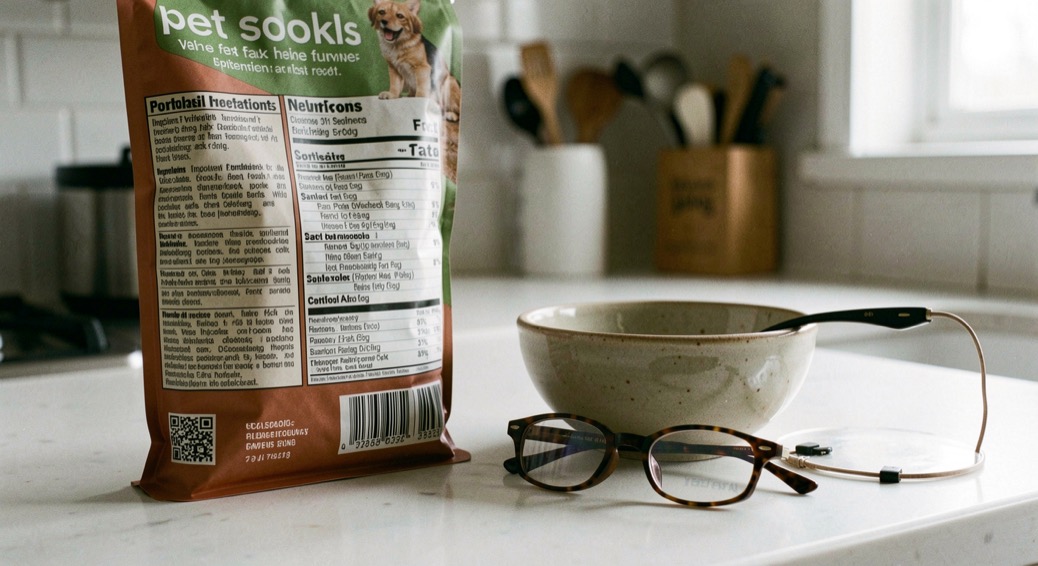
Read the label as a set of claims
A food label is designed to communicate several things at once: what the product is, who it is intended for, how much to feed and which standards or claims apply. Start with the product identity and life-stage statement, then look for the manufacturer information and feeding directions. Marketing language may be appealing, but it is not the same as a nutritional assessment. The label gives you a starting point for questions. It cannot tell you whether the food is right for a particular pet without the context of age, health, activity and the rest of the diet.
Separate ingredients from adequacy
Ingredient lists answer one kind of question and nutritional adequacy statements answer another. An ingredient list shows components in a regulated order, but it does not by itself describe digestibility, nutrient balance or how a recipe fits an individual animal. WSAVA nutrition resources encourage readers to look for qualified formulation and quality-control information rather than relying on a single fashionable ingredient. If a package makes a strong promise, ask what evidence supports it and whether the statement applies to the complete food or a complementary product.
Find the practical feeding information
Serving guidance is usually a starting range, not a command. It may be expressed by weight, life stage or activity, and it may not account for treats, mixed feeding or a pet whose needs differ from the average. Look for the unit used, whether the amount is per day, and how the label describes a transition. Use a consistent bowl or scale if your veterinary team wants a more precise record. The number becomes useful when paired with body condition, appetite, energy and a professional plan.
Ask who formulated and checked it
A credible manufacturer should be able to explain who formulates the food, what quality-control steps are used and how the finished product is tested. If answers are difficult to find, note that as part of the comparison. WSAVA's Global Nutrition Toolkit is a useful reference for questions about nutrition expertise, manufacturing and label claims. This is not a purity contest. A transparent company that can explain its process gives a household better information than a beautiful package with no meaningful answers behind it.
Be careful with dramatic exclusions
Words such as natural, premium, ancestral or grain-free can sound like complete explanations while leaving important context out. An absence claim does not automatically create a benefit, and a named ingredient does not automatically create a problem. Diet changes can also affect appetite, stools and routine. If your pet has a diagnosed condition, allergy history, poor appetite or a medication plan, move the decision to a veterinarian or qualified veterinary nutrition professional.
Make a label note you can revisit
Photograph the front and the feeding panel, record the food name and write down the reason you are considering a change. Compare like with like: complete foods with complete foods, the same life stage where possible, and clear information from each manufacturer. Bring the shortlist to your veterinary team. WSAVA nutrition guidelines place the animal's needs and a balanced, appropriate diet at the centre of the conversation. The best label habit is modest: read carefully, ask better questions and change one variable at a time.
KEEP THIS CLOSE
Four small moves
- Use the adequacy statement, feeding directions and manufacturer information together.
- Treat ingredient lists as context, not a stand-alone health ranking.
- Ask about formulation and quality control when package claims are strong.
- Get professional advice before changing a therapeutic or medically important diet.
Sources & further reading
These links shaped the frame for this dispatch. They are starting points for a deeper conversation, not a substitute for individual advice.