GEAR + HOME / DISPATCH
Making a Pet-Friendly Home
A room-by-room audit for safer routes, restful spaces and household routines that are easier to maintain.
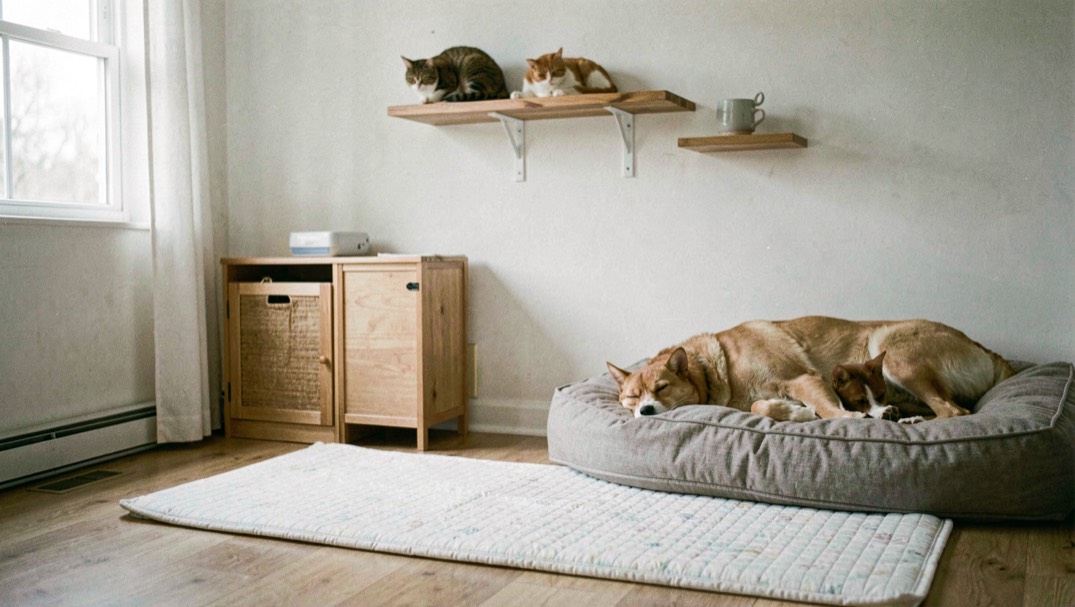
Walk through at the animal's height
A household safety check changes when you crouch down. Look for loose cords, reachable medicines, unstable objects, small items that could be swallowed and doors that do not latch. Notice whether a pet has to cross a busy doorway to reach water or rest. This is not a demand for a perfect minimalist home. It is a way to see the routes your dog or cat uses every day. Fix the high-risk items first, then improve the small points of friction that make care harder.
Create a true retreat
Every pet needs a place where people do not reach in casually. For a dog, that may be a bed behind a low boundary; for a cat, a covered bed, shelf or separate room. The retreat should not be used as a punishment, and children should know that an animal there is off duty. Place it away from direct heat, loud appliances and the busiest path. A retreat is useful because it is available before the pet has to ask for distance through a stronger signal.
Make resources easy to locate
Water, food, litter, leads, towels and cleaning supplies each need a sensible home. Keep food and cleaning chemicals apart, secure bins and make sure litter areas remain accessible without being trapped by another animal. In a small home, vertical storage can free a route while keeping dangerous items out of reach. Label a box if several people share the care. A clear home reduces the chance that a tired person will improvise with a loose bag, an open cupboard or a missing lead.
Design for paws, claws and weather
Flooring and fabrics affect confidence. A slippery surface can make a dog hesitate or change how an older pet moves. Washable runners, stable mats and trimmed nails may help, but persistent changes in movement belong in a veterinary conversation. Protect window screens, keep balcony access secure and choose plants with animal safety in mind. Seasonal gear should be dry and easy to find. A home that supports care is not one with no mess. It is one where the messy part has a safe route through it.
Plan visitor and delivery moments
Many pets find arrivals harder than the household expects. Decide where the pet can go before the bell rings, place treats or toys there and tell visitors which signals mean the animal wants space. Keep doors and gates secure, especially during moves or busy gatherings. A cat may prefer a closed room; a dog may need a quiet leash route and a break from attention. Practise the plan when nothing is happening so the response is familiar when the parcel, guest or repair person arrives.
Review after a week of living
An audit is a starting point. Notice where the blanket migrates, where the cat chooses to rest and which cupboard people leave open. Adjust the environment rather than blaming the animal for using the route available. RSPCA welfare guidance is a useful reminder that a good home supports natural behaviour, safety and choice. Add one change at a time and keep what makes the routine calmer. The most pet-friendly home is not styled for photographs. It is legible to the people and animals who actually live there.
KEEP THIS CLOSE
Four small moves
- Audit the home from the pet's height and fix the highest risks first.
- Give every animal a retreat where contact is not expected.
- Store daily care items where the whole household can reach them safely.
- Revisit the setup after observing the routes pets actually choose.
Sources & further reading
These links shaped the frame for this dispatch. They are starting points for a deeper conversation, not a substitute for individual advice.