DOGS / DISPATCH
A Healthy Dog Grooming Routine
How to turn brushing, paw checks and bathing into short, cooperative habits that reveal useful changes early.
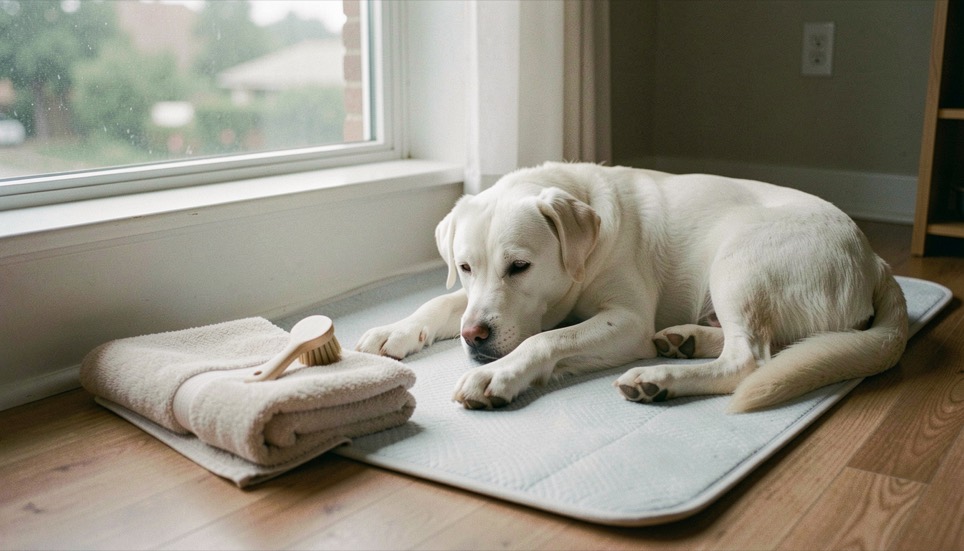
Make grooming a series of small invitations
A grooming routine is easier to sustain when it is not one large weekly event. Touch one paw while your dog is relaxed, brush one shoulder, or look at the coat after a walk. Stop while the animal is still comfortable. These small sessions teach that handling has a beginning and an end, and they give you a clearer baseline for what is normal on your dog. The aim is cooperation, not endurance. If the dog moves away, respect the message and make the next session shorter, quieter or more rewarding.
Choose tools for coat and comfort
Brushes are not interchangeable. Coat length, density, curl and sensitivity around joints change what a dog can tolerate. A tool that glides through the top layer may miss tangles closer to the skin, while a sharp or overly forceful brush can make a dog wary of the whole ritual. Ask a groomer or veterinary team to demonstrate a safe approach for your dog's coat. Keep tools clean, check for rough edges and store them where the dog will not chew handles or bristles. The right tool is the one that works gently enough to be used consistently.
Use paw and skin checks as observation
Paw pads, between toes, ears and the skin under a collar deserve brief, calm attention. Look for changes in colour, swelling, heat, discharge, odour, broken skin or a new sensitivity to touch. These observations are not a diagnosis and should not become a search for a scary explanation. They are useful details to record and share with a veterinarian if they persist or concern you. After wet walks, drying between toes and checking for grit can prevent a small irritation from becoming a repeated source of discomfort.
Keep bathing separate from every brush
Many dogs do not need frequent full baths, and the right interval depends on coat, lifestyle and veterinary advice. When a bath is appropriate, prepare the room first: non-slip footing, comfortable water, a dog-safe product and a towel within reach. Avoid turning a reluctant dog into a wrestling match. A rinse that is incomplete or a product that irritates the skin can create more trouble than the dirt did. If a dog has a persistent odour, itchy skin or repeated ear problems, move the question to a veterinary professional rather than adding stronger products.
Protect face, ears and nails from hurry
The sensitive jobs deserve their own training plan. Let the dog see the nail tool without using it, touch an ear flap without inserting anything, and reward a chin resting in your hand before attempting a face wipe. Never use cotton swabs deep in an ear canal. Nail length, paw posture and the individual dog's history all affect what is safe at home. A groomer or veterinary nurse can show you where to stop. If a dog panics, the humane answer is a slower plan and skilled support, not more restraint.
Write down the normal version
A once-a-month note can be more valuable than a large basket of products. Record the coat's usual texture, how the dog reacts to brushing, the last professional groom and any areas that need watching. Take a clear photo when a change is visible, but do not compare your dog to an internet image as if it were an examination. Preventive-care guidance from veterinary associations supports regular observation and individual planning. Grooming is one of the easiest ways to build that observation into the day, provided the dog remains a participant rather than a project.
KEEP THIS CLOSE
Four small moves
- Use short sessions and finish before the dog needs to escape.
- Match the brush, shampoo and nail plan to the individual coat and history.
- Record changes instead of trying to label them from a photo search.
- Use a groomer or veterinary professional when handling becomes fearful or painful.
Sources & further reading
These links shaped the frame for this dispatch. They are starting points for a deeper conversation, not a substitute for individual advice.