CATS / DISPATCH
Cat Enrichment in Small Spaces
A practical way to add choice, movement and quiet observation when your home has limited floor space.
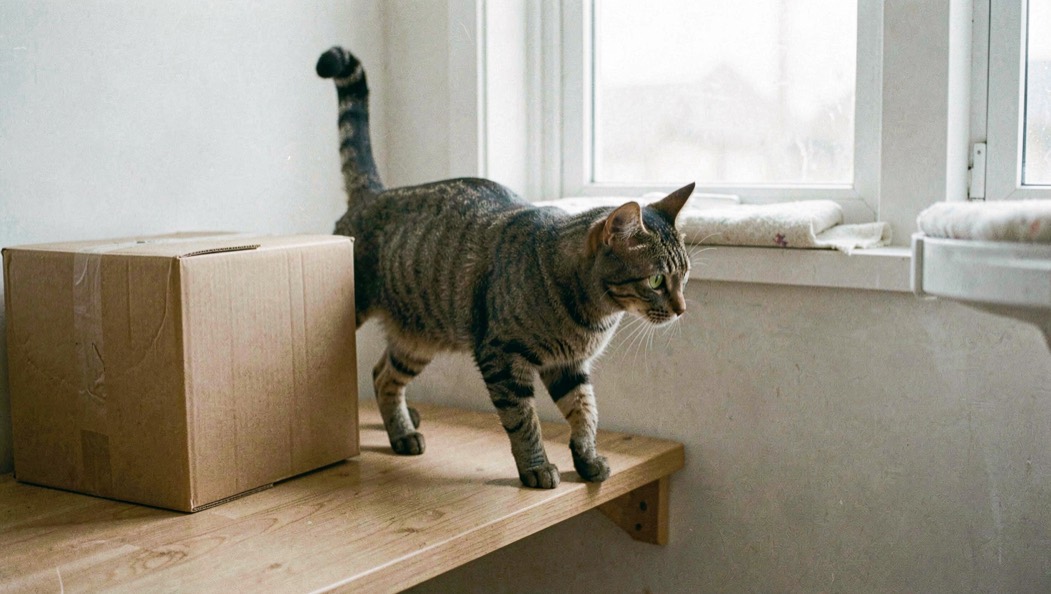
Think vertically and in routes
Floor area is only one part of a cat's territory. A secure window perch, a shelf with a clear landing and a chair that creates a higher route can add options without filling the room with furniture. The key is not height for its own sake. Each elevated point should be stable, easy to reach and connected to a retreat. Map how the cat already moves through the space, then add one safe detour. A route that lets a cat pass without crossing a busy doorway can be more valuable than a large tower placed in the middle of everything.
Offer three kinds of quiet
Enrichment is not constant stimulation. Cats need a place to watch, a place to hide and a place where no one expects interaction. A cardboard box on its side, a covered bed or the underside of a sturdy table can serve as a retreat if the cat can leave freely. Keep one rest area away from the litter tray and the busiest foot traffic. When the home is small, visual boundaries matter. A folded blanket over one side of a bed can create privacy without stealing much space.
Rotate objects, not the whole room
A small collection of safe toys can feel new when it changes gradually. Leave a familiar favourite available and rotate two or three other objects every few days. Paper bags without handles, cardboard tubes and food puzzles can add investigation when used safely and supervised. Watch how the cat plays: some prefer a ground chase, others want something moving near a wall or a quiet object to bat. Remove damaged items and avoid strings left out unattended. Novelty works best when it supports the cat's style rather than demanding a performance.
Use food as a thinking opportunity
A portion of the cat's usual food can be offered through a simple puzzle or spread across a few safe locations, provided the cat can access the food without frustration. Start with an easy version and observe whether the cat engages, walks away or becomes tense. Enrichment should not turn meals into a contest. If another animal shares the home, separate feeding resources can protect the quieter eater. Nutrition questions belong with a veterinary professional, especially when changing amounts or accommodating a medical diet.
Make windows useful without making them risky
A window offers sound, scent and movement, but it also introduces safety questions. Check that screens are secure, keep cords out of reach and make sure a perch cannot tip when the cat jumps onto it. A view of a bird feeder may entertain one cat and frustrate another. If the cat becomes agitated, change the sight line or add a resting option farther away. Enrichment is measured by the cat's body language afterward: relaxed interest is different from repeated pacing or a tense vigil.
Read the result over a week
Take a short note after adding one change: where the cat rests, when play happens, whether hiding is voluntary and whether the household can maintain the setup. This prevents a small apartment from becoming a rotating exhibition of unused equipment. Cats often tell you which changes matter through repetition. Use that information to refine the route. RSPCA cat welfare resources offer a useful reminder that good care includes choice, safe retreat and opportunities for natural behaviour. The smallest useful upgrade may be a stable shelf, an open box or a door that stays quiet.
KEEP THIS CLOSE
Four small moves
- Add one stable vertical or hidden option before buying a larger setup.
- Rotate safe objects gradually and supervise anything that can fray or break.
- Keep food puzzles easy enough to be satisfying, not frustrating.
- Watch the cat's recovery and resting choices after each change.
Sources & further reading
These links shaped the frame for this dispatch. They are starting points for a deeper conversation, not a substitute for individual advice.