CATS / DISPATCH
Bringing a New Cat Home
A room-by-room arrival plan that gives a new cat territory, choice and time to learn the household.
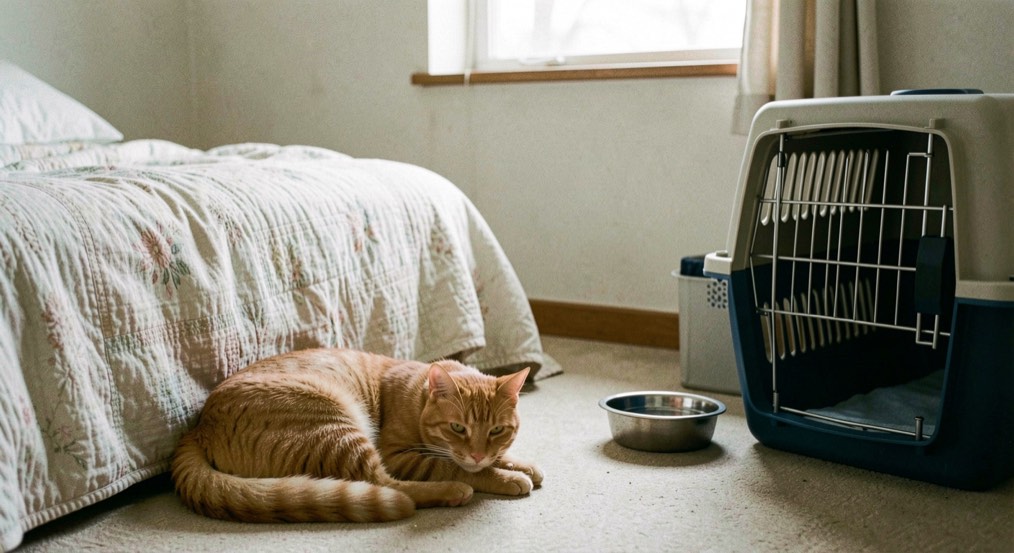
Prepare one room before the carrier arrives
A new cat does not need the whole home on the first day. A quiet room with a closed door gives the animal a manageable territory and gives you a place to observe eating, drinking, toileting and rest. Set up a hiding option, a comfortable bed, food and water placed apart from the litter tray, and a few safe objects that carry familiar smells if available. Check windows, cords and gaps behind furniture before arrival. The room is not a punishment. It is a landing strip from which the cat can choose the next step.
Let the carrier become an open door
Place the carrier on the floor, open the door and allow the cat to leave in its own time when possible. Sit sideways rather than leaning over the opening. A soft voice and a still body are often more useful than coaxing. Some cats walk out immediately; others wait until the room is quiet. Avoid pulling a hidden cat into the middle of the space to create a more photogenic introduction. Early trust grows when the animal learns that a retreat is available and that people can be near without taking control of every movement.
Keep the first routine deliberately plain
For the first days, predictability beats novelty. Bring meals at similar times, scoop the litter quietly and visit for short periods that end before the cat becomes overwhelmed. Offer play only if the cat seeks it. Watch from a distance for body posture, appetite, toileting and interest in the room. A new home can change behaviour temporarily, so a written note is more reliable than a single impression. If the cat will not eat, seems unwell or you have concerns about the transition, contact the adoption organisation or a veterinarian promptly.
Expand territory by choice
When the cat is eating, using the litter area and moving confidently in the starter room, open one additional route rather than every door at once. Keep the original room available as a retreat. Add height where possible, protect narrow gaps and make sure another animal cannot block the way back. The cat decides whether a new space is worth exploring. You can make it easier by reducing noise, keeping visitors brief and placing familiar resources where they remain easy to find. Confidence is not measured by how quickly a cat occupies the sofa.
Introduce people and pets in layers
A home is a social map. Let the cat meet one calm person at a time, and let that person ignore the cat at first if the animal prefers. For resident pets, begin with scent exchange and separated meals before visual contact. Use barriers that allow retreat and avoid forced nose-to-nose greetings. A slow introduction protects the relationship you want later. If tension persists, seek guidance from a qualified behaviour professional or veterinary team; online shortcuts often miss the details of the household and the individuals involved.
Book the health conversation
Adoption paperwork should start a useful veterinary record, not replace a new-pet appointment. Bring the food information, medication details and any previous notes you have. Ask about preventive care, parasite control, identification, vaccination history and a plan suited to age and lifestyle. AAHA and feline preventive-health guidance both emphasise individual assessment. The first appointment can be calm and practical if you write questions before the carrier comes out. This is general education, not a diagnosis. A veterinarian is the right person to interpret a health change in the cat in front of you.
KEEP THIS CLOSE
Four small moves
- Give the arrival a quiet room with separated food, water and litter resources.
- Keep a retreat open and let the cat set the pace of exploration.
- Introduce people and resident animals through gradual, reversible steps.
- Arrange a veterinary plan that fits the cat's age, history and home.
Sources & further reading
These links shaped the frame for this dispatch. They are starting points for a deeper conversation, not a substitute for individual advice.