HEALTH / DISPATCH
When Pet Health Information Needs a Vet
A calm framework for deciding when online education should become a call, appointment or urgent conversation.
Use information to prepare, not to conclude
Online health information can help you name a change, gather a timeline and find the right kind of professional. It cannot palpate an abdomen, assess breathing, compare a gum colour in person or interpret a full history. Start by describing what you observed without attaching a diagnosis: what changed, when it began, how often it happens and what else was different that day. A clear description gives a veterinary team something useful to work with. The safest search is the one that ends with better questions, not a confident label.
Notice the pattern and the pace
A single unusual moment may pass; a repeated or worsening change deserves a different level of attention. Note appetite, water intake, toileting, movement, sleep, breathing, energy and behaviour in plain language. If a pet seems in severe distress, cannot breathe normally, collapses, has significant bleeding, is unresponsive or may have swallowed something dangerous, seek urgent veterinary advice rather than continuing to research. The exact threshold depends on the individual animal and context. Speed matters more than a perfect record when the situation feels acute.
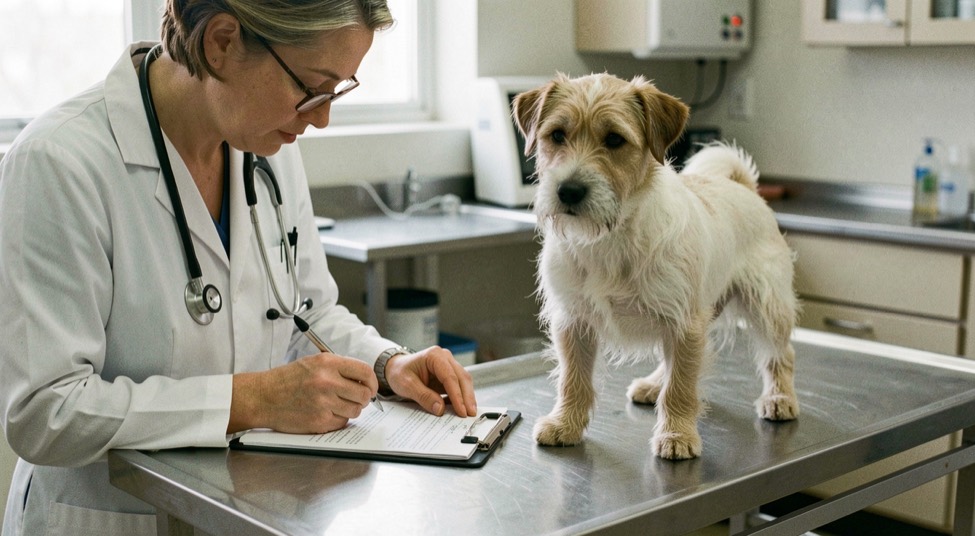
Do not let a normal-looking photo overrule a change
Animals can look composed in a still image while feeling very different across a day. A photograph is useful evidence, but it is not a clearance. Video can show a repeated movement or breathing pattern more honestly, provided filming does not delay care or stress the pet. Record the time and circumstances, then share the material through the clinic's preferred channel. Avoid comparing the image with a social post or trying a treatment because a symptom appears similar. Similar-looking signs can have different causes and different risks.
Prepare a compact appointment brief
Before calling, gather the pet's age, species, weight if known, current food, medications, supplements, relevant history and the exact timeline. List what changed first and what happened next. Bring packaging for anything the animal may have eaten and do not discard it. Ask whether the situation is best handled by an immediate visit, a routine appointment or a monitored plan with a clear follow-up point. Veterinary associations such as AAHA publish preventive-care guidance, but the clinician who examines your pet must interpret the current concern.
Know that reassurance is still care
A veterinary visit does not need to end with a dramatic finding to be worthwhile. An exam can establish a baseline, rule out urgent problems and give you a practical observation plan. If the advice is to monitor, ask what improvement should look like, how long to wait and what change should trigger a return call. Write it down. Vague reassurance can leave a household searching again; a defined plan creates a safer pause. For ongoing issues, ask what records or videos would make the next conversation more useful.
Keep the boundary visible
This article is health education, not diagnosis, treatment or a substitute for a veterinary relationship. That boundary is not a disclaimer pasted on top of care. It is a design principle for responsible publishing. The most helpful content tells you what to observe, why context matters and where professional judgment enters. AAHA preventive resources and veterinary guidelines are better starting points than anonymous symptom lists. If you are worried about your pet now, contact a veterinarian or emergency service appropriate to your location. A timely conversation is the right next step when uncertainty and risk are both high.
KEEP THIS CLOSE
Four small moves
- Describe the change and timeline before searching for a label.
- Escalate rapidly when distress is severe, worsening or potentially toxic.
- Bring medication, food and timeline details to the veterinary conversation.
- Treat this page as education, never as a remote diagnosis.
Sources & further reading
These links shaped the frame for this dispatch. They are starting points for a deeper conversation, not a substitute for individual advice.